


ChessBase 17 - Mega package - Edition 2024
It is the program of choice for anyone who loves the game and wants to know more about it. Start your personal success story with ChessBase and enjoy the game even more.
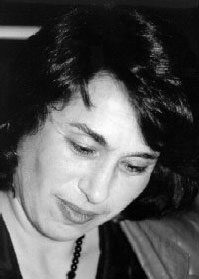
Until a few decades ago, women chess players were an obvious minority in the chess playing population. Rated women chess players, an even much smaller entity. FIDE had separate listings of men and women players. The top places in the International Rating List were monopolized my men. And the best women chess players belonged to only a few European countries.
Today, women’s chess has gone a long way. If there’s one particular individual who can be credited for its tremendous growth and development, it’s none other than International Woman Grandmaster Nana Alexandria. From 1986 to 2002, Nana was Chairperson of the Commission for Women’s Chess, FIDE’s permanent committee tasked to promote and develop chess activities for women and the preparation of programs aiming, progressively, at a better representation of women in all aspects of chess activities. She was the ideal choice for the job because of her keen understanding of the means to stimulate interest in chess.
Nana has accomplished much for women’s chess. She’s the brain behind the Women’s Chess Oscar Award, the institution of the different age-group Championships for Girls and the synchronization of the men’s and women’s championship cycles. Through her recommendations, many open tournaments now offer prizes to top women players. And lately, she has realized her dream of staging the Women’s World Team Championship and the inclusion of an all-women team in the World Team Championship.
Nana Alexandria’s ideas were drawn from her vast experiences an outstanding chess player. Born on October 13, 1949 in Poti, Georgia (USSR), Nana learned chess at the age of four from her father, a mathematician. At ten, she started formal lessons in the famous Georgian chess school of V. Karseladze. Within six months she became the girls’ champion of Tbilisi. She reached master strength at fifteen. By the age of twenty, Nana had won the USSR Women’s Championship for the third time, an achievement that was never equalled.
The year 1975 was very significant for Nana [pictured that year]. This was when she suffered a heartbreaking loss to Nona Gaprindashvili, 8½-3½, on her first attempt to win the world women’s title. In the ninth game where she had a tremendous advantage, she blundered away a piece and lost. Psychologically beaten, she was not able to recover and lost three games in succession. In 1981, she got another crack at the world title, this time against Maya Chiburdanidze. She lacked self-confidence and did not expect to win the match when suddenly she found the title within her grasp.
From 1969 through1986, Nana played for the USSR in six Olympiads, invariably contributing significantly to the effort of winning the gold medal every time. She participated in three more Olympiads from 1992 to1996 as Captain of the victorious Georgian Women’s Team. Moreover, Nana was a three-time Champion of Georgia, a three-time USSR Women’s Champion, and the first placer in about 20 important international tournaments.

1981 Women's World Championship Match Maia Chiburdanidze vs Nana Alexandria
Among the well-known grandmasters she has beaten are Jan Timman and Aivars Gipslis. This is not surprising since Nana was seconded by Mark Dvoretsky, one of the world’s best trainers, and theoretician Viktor Gavrikov. Her constant trainer was master David Janoev, an Honored Trainer of Georgia.
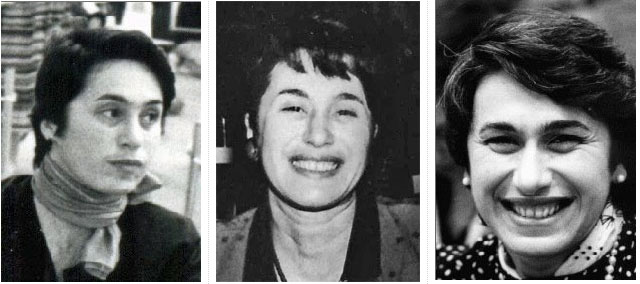
(L to R) Nana Alexandria in 1986, at the 1990 Novi Sad Olympiad, and in 1996
 Nana Alexandria at the Olympiad in 1996 |
Nana is a popular TV and print journalist. She has written many articles for various chess journals throughout the world (Georgia, Russia, Latvia, Yugoslavia, Spain, USA, Australia, and Holland) in Georgian, Russian and English languages and two books: "8:8 – Victory and Defeat" in Russian and Georgian (2005), and "Georgian Women Chess Phenomenon" in English. She has also made the documentary film, “Georgian Gambit”, in three languages (Georgian, English and German).
Her best and favorite games? In terms of content and quality of play, the fourth match game against Nana Ioseliani in the 1981 Final Candidates’ Match stands out among the best. But the one that brings fondest memories is her game as black against E. Rubtsova in 1962. “This was my first game that appeared on the papers of the Sports Magazine. I was twelve years old then. There was the photo article about me with this very game entitled, ‘Remember this girl!’ It was my first tournament outside of Georgia”, Nana recalls.
If Nana had not pursued an active chess career, she would have been a teacher at the Tbilisi University. She is a philologist by education, and did postgraduate work in literature. She had varied hobbies such as collecting postcards and photos of famous international artists. Because of her love for music, she studied piano for five years. At school she did well in mathematics. In summary, Nana is a well-rounded individual with wide-ranging interests.
Nana is not just brainy. Twenty-nine years ago, she captured the hearts of many when her lovely face appeared in Chess Life (USCF) magazine. She has retained her beauty and charm and — more importantly — when she could only manage to tie the score of her second challenge match for the world crown in 1981, Nana Alexandria was undaunted. She remained competitive and aspired for an even greater, more valuable goal — advocating the cause of women’s chess with intensity and determination to see to it that women chessplayers enjoy virtually the same recognition and privileges accorded their male counterparts.

Nana Alexandria at the Manila Olympiad 1992, being interviewed by Elmer Dumlao Sangalang
On the occasion of the 60th anniversary of her birth, I wish to congratulate Nana Alexandria, on behalf of the world chess fraternity, for her accomplishments and pray that she will achieve even greater successes on and off the chessboard! And thank you very much, our dearly beloved Nana, for all your wonderful gifts to chess!