

ChessBase 17 - Mega package - Edition 2024
It is the program of choice for anyone who loves the game and wants to know more about it. Start your personal success story with ChessBase and enjoy the game even more.
Note: This story was updated in 2018
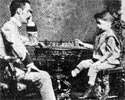
Child prodigies are a well-known phenomenon in chess, which is one of the few sports or intellectual activities where children can compete with adults on equal ground (another is computer games). The great Capablanca learned the game at four, and was one of the strongest players in Cuba in his early teens. Samuel Reshevsky also started at four and was giving simultaneous exhibitions at six.
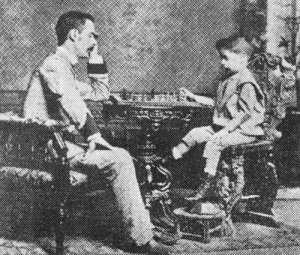
Four-year-old Capablanca playing against his
father, soon after learning the moves in 1892
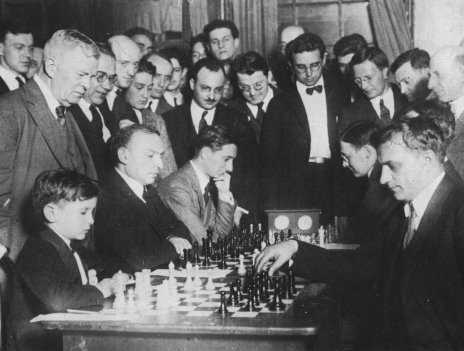
Sammy Reshevsky playing Charles Jaffe at 11. He tied for third with Janowski, Bigelow and Bernstein.
In recent times we have seen the record for youngest grandmaster in the history of the game topple repeatedly. In 1991 Judit Polgar, a female at that, broke Bobby Fischer's 33-year-old mark by becoming a grandmaster a month earlier than he had done. In 1994 her record was broken by fellow-Hungarian Peter Leko, who a short time later was overtaken by Ukrainian Ruslan Ponomariov. The latter went on to become FIDE world champion. In 2001 14-year-old prodigy Teimour Radjabov, who hails from the same town as Garry Kasparov (Baku), became the second-youngest grandmaster in history.
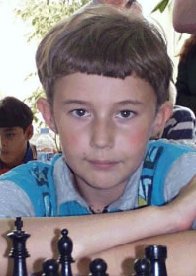 Sergey Karjakin, grandmaster at 12 |
But all these records were shattered on August 20, 2002, when Sergey Karjakin (pronounced car-yack-kin) of the Ukraine fulfilled his final grandmaster norm at the age of 12 years and seven months. He did so at the international chess tournament in Sudak, a town on the Crimea Peninsula. His FIDE rating at the time was 2523.
In the same year Sergey became one of the seconds of world champion Ruslan Ponomariov. This was another record he achieved before he had reached his teens. Today (January 2011) Sergey is a top grandmaster, ranked fifth in the world, with a 2776 rating that is climbing steadily. Although we must be cautious with such statements one must assume that his records will not be broken.
One extraordinary chess prodigy came close. In 2004 Magnus Carlsen of Norway completed his GM norms, eight months later than Karjakin had done. Carlsen, who at 18 trained for a while with Garry Kasparov, went on to become the top-ranked player in the world, crossing the magic 2800 mark – the youngest player by far to achieve both these feats.

Norwegian chess prodigy Magnus Carlsen
Below we have compiled a list of the youngest grandmasters in history. In the future we may be updating this list, as new GMs under 15 years of age emerge.

The currently (January 2011) youngest grandmaster in the world is Illya Nyzhnyk, who completed his title at the age of 14 years 3 months and 2 days.
|
No. |
Player |
Nat. |
years |
mths |
days |
born |
GM |
FIDE |
|
1 |
Sergey Karjakin |
UKR |
12 |
7 |
0 |
1990 |
2002 |
|
|
2 |
Parimarjan Negi |
IND |
|
|
|
1993 |
|
|
|
3 |
Magnus Carlsen |
NOR |
13 |
4 |
27 |
1990 |
2004 |
|
|
4 |
Bu Xiangzhi |
CHN |
13 |
10 |
13 |
1985 |
1999 |
|
|
5 |
Richard Rapport |
HUN |
13 |
11 |
15 |
1996 |
2010 |
|
|
6 |
Teimour Radjabov |
AZE |
14 |
0 |
14 |
1987 |
2001 |
|
|
7 |
Ruslan Ponomariov |
UKR |
14 |
0 |
17 |
1983 |
1997 |
|
|
8 |
Wesley So |
PHI |
14 |
1 |
28 |
1993 |
2007 |
|
|
9 |
Etienne Bacrot |
FRA |
14 |
2 |
0 |
1983 |
1997 |
|
|
10 |
Jorge Cori |
PER |
14 |
2 |
0 |
1995 |
2009 |
|
|
11 |
Illya Nyzhnyk |
UKR |
14 |
3 |
2 |
1996 |
2010 |
|
|
12 |
Maxime Vachier-Lagrave |
FRA |
14 |
4 |
0 |
1990 |
2005 |
|
|
13 |
Peter Leko |
HUN |
14 |
4 |
22 |
1979 |
1994 |
|
|
14 |
Hou Yifan |
CHN |
14 |
6 |
2 |
1994 |
2008 |
|
|
15 |
Anish Giri |
RUS |
14 |
7 |
2 |
1994 |
2009 |
|
|
16 |
Yuri Kuzubov |
UKR |
14 |
7 |
12 |
1990 |
2004 |
|
|
17 |
Dariusz Swiercz |
POL |
14 |
7 |
29 |
1994 |
2009 |
|
|
18 |
Nguyen Ngoc Truong Son |
VIE |
14 |
10 |
0 |
1990 |
2004 |
|
|
19 |
Daniil Dubov |
RUS |
14 |
11 |
14 |
1996 |
2011 |
|
|
20 |
Ray Robson |
USA |
14 |
11 |
16 |
1994 |
2009 |
|
|
21 |
Fabiano Caruana |
ITA |
14 |
11 |
20 |
1992 |
2007 |
|
|
22 |
Samvel Ter-Sahakyan |
ARM |
14 |
11 |
? |
1993 |
2008 |
|
|
23 |
Andrei Volokitin |
UKR |
15 |
0 |
22 |
1986 |
2001 |
|
|
24 |
Yangyi Yu |
CHN |
15 |
0 |
23 |
1994 |
2009 |
|
|
25 |
Koneru Humpy |
IND |
15 |
1 |
27 |
1987 |
2002 |
|
|
26 |
Hikaru Nakamura |
USA |
15 |
2 |
19 |
1987 |
2003 |
|
|
27 |
Suri Vaibhav |
IND |
15 |
2 |
21 |
1997 |
2012 |
|
|
28 |
Pentala Harikrishna |
IND |
15 |
3 |
5 |
1986 |
2001 |
|
|
29 |
Le Quang Liem |
VIE |
15 |
3 |
17 |
1991 |
2006 |
|
|
30 |
Yaroslav Zherebukh |
UKR |
15 |
3 |
? |
1993 |
2008 |
|
|
31 |
Judit Polgar |
HUN |
15 |
4 |
28 |
1976 |
1991 |
|
|
32 |
Alejandro Ramirez |
CRI |
15 |
5 |
14 |
1988 |
2003 |
|
|
33 |
Arkadij Naiditsch |
GER |
15 |
5 |
? |
1985 |
2001 |
|
|
34 |
Bobby Fischer |
USA |
15 |
6 |
1 |
1943 |
1958 |
- |
Apart from the age at which they became grandmasters we are also interested in the question or how strong the juniors were at different ages. Garrett Kingman, who is an undergraduate at Harvard University studying and regenerative biology, prepared the following illuminating graph for us:

As we can see Magnus Carlsen was the highest ever rated starting from the age of fifteen. Anish Giri is the second-strongest sixteen-year-old in history, Sergey Karjakin the third strongest. From then on it is Karjakin, Maxime Vachier-Lagrave and Fabiano Caruana battling for the rank of second, third and fourth strongest 17- and 18-year-olds, with Giri and Wesley So not in contention because they have not yet reached that age. Garrett Kingman sums it up as follows: "Giri is higher rated than any 16-year-old not named Magnus Carlsen has ever been, and he is climbing faster than Carlsen was at the same age. Progressing slightly ahead of Karjakin and Radjabov, there is no question that Giri will become a permanent top ten player and world title challenger. Carlsen-Giri 2016 anyone?"
It is worth mentioning that although Judit Polgar only became an official GM at 15+, she was rated a whopping 2555 at the tender age of twelve (after her unbelievable 2694 performance at the Olympiad). We also believe that she was the youngest top 100 player in history.
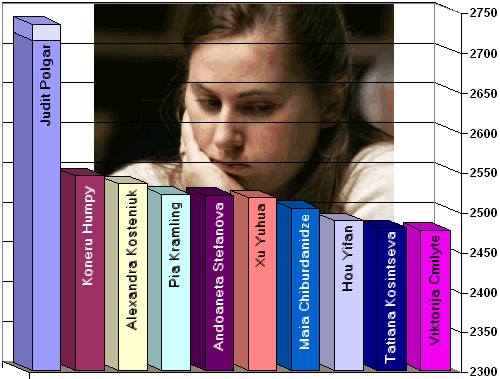
Judit Polgar's dominance of women's chess back in 2006
Paul Morphy, 1837-1884, beat Johann Löwenthal 3-0 at age 12.
José Raúl Capablanca, 1888-1942, learned chess at the age of four, beat his country's chess champion in a match when he was 13, and eventually became world champion (see above).
Samuel Reshevsky, learned the rules at the age of 4, and gave simultaneous exhibitions at the age of six (see above).
Arturo Pomar played in the Spanish Championship at age 10 and became a master at age 13. He drew Alekhine in Gijon in 1944 at the age of 13.
Boris Spassky became an International Grandmaster at 18 and went on to become world champion.
Bobby Fischer became US Champion at the age of 14 and a world championship candidate at 15. He went on to become world champion.
Henrique Mecking of Brazil learned the game at 6, gave some simultaneous displays at 9, won the Brazilian championship at 13, and South American Zonal at 14, and became an IM at 15. He won two Interzonal Tournaments in a row, at 21 and 24.
Anatoly Karpov became a grandmaster at 18 and went on to become world champion.
Garry Kasparov became a grandmaster at 17 and went on to become the youngest ever world champion (at 22).
Nigel Short finished joint first in the British Championship at the age of 14.
Viswanathan Anand became India's first International Grandmaster at 18 and went on to become the FIDE knockout world champion.
Michael Adams became an International Master at 15 and a grandmaster at 17.
Pentala Harikrishna became India's youngest grandmaster at 15.
Gata Kamsky had an Elo rating of 2650 at the age of 16.
Luke McShane won the World Under-10 Championship at the age of eight.
Ruslan Ponomariov became the youngest ever FIDE knockout world champion at the age of 18.
Alejandro Ramirez became a grandmaster at 15, a month earlier than Fischer. He is the first grandmaster ever in Central America.
Magnus Carlsen became the second-youngest grandmaster in history at 13, and broke Fischer's record by becoming a world championship candidate at 15 years and one month.
As of this writing (January 2006) Parimarjan Negi has achieved five IM norms and one GM norm. He is twelve years old.
Mona Khaled achieved the WIM title and two WGM norms in 2005, when she was eleven years old. At the same time she won both the Arabian and the African Girls Junior Championship in the under 20 group in 2005, although she was the youngest player in both tournments.
In July 2006 Parimarjan Negi of India completed his final GM norm to become the second-youngest grandmaster in the history of the game.
In January 2007 David Howell became the youngest grandmaster in UK history, at sixteen years and one month, breaking Luke McShane's previous record set in 2000 by six months.
On December 7th 2007 Wesley So of the Philippines made his final grandmaster norm at the age of 14 years, one month and 28 days to become the seventh youngest GM in history.
In 2008 Hou Yifan, born February 27, 1994, in Xinghua, China, became the youngest ever female in history (at the age of 14 years 6 months 2 days) to qualify for the title of grandmaster.
At the Wijk aan Zee tournament on January 30, 2009 the Russian/Nepalese/Dutch player Anish Giri, born on June 28, 1994, completed his third and final GM norm, at the age of 14 years, 7 months and 2 days.
In October 2009 Ray Robson made his final GM norm, becoming the youngest US player ever to achieve this. He was 14 years, 11 months and 16 days old at the time. Ray was formally awarded the title in January 2010.
In April 2009 Dariusz Swiercz (born 31 May 1994), became a grandmaster, just days before his fifteenth birthday.
In March 2010 Hungarian prodigy Richard Rapport made his final GM norm at the Gotth' Art Cup, three weeks before his fourteenth birthday.
On December 29th 2010, three months after his 14th birthday, Ukrainian prodigy Illya Nyzhnyk drew his penultimate game at the Schaakfestival Open in Groningen to complete his final GM norm. His performance in the whole event was 2670.
James Satrapa of Canberra, Australia, provided us with the data of four additional players we had missed: Yangyi Yu of China, Le Quang Liem of Vietnam, Yaroslav Zherebukh of Ukraine and Samvel Ter-Sahakyan of Armenia. All have been duly added to our list. We welcome additions and corrections by our readers. James Satrapa sent us data which allowed us to insert Andrei Volokitin and Arkadij Naiditsch into the list. He also introduced us to the currently (July 2011) second youngest GM in the world: Daniil Dubov of Russia.
Note: This story was updated in 2018