
ChessBase 17 - Mega package - Edition 2024
It is the program of choice for anyone who loves the game and wants to know more about it. Start your personal success story with ChessBase and enjoy the game even more.
 In
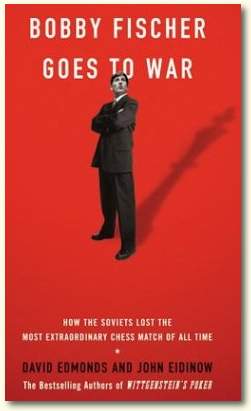
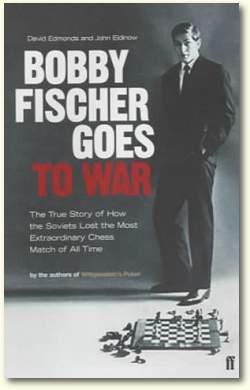
a new book entitled Bobby Fischer Goes to War: How the Soviets Lost the
Most Extraordinary Chess Match of All Time, BBC journalists David Edmonds
and John Eidinow detail the match and its high-stakes geopolitical context.
In
a new book entitled Bobby Fischer Goes to War: How the Soviets Lost the
Most Extraordinary Chess Match of All Time, BBC journalists David Edmonds
and John Eidinow detail the match and its high-stakes geopolitical context.
National Public Radio (NPR), an internationally acclaimed producer and distributor of noncommercial news, talk, and entertainment programming, has interviewed the authors of the book. Edmonds and Eidinow tell the station's Liane Hansen how the Fischer-Spassky contest was custom-made for the modern world media. What it lacked in excitement, the match easily made up for in Cold War hype as a cerebral battle of superpower talent. Extensive television and newspaper coverage ensured that citizens of both nations tuned in and read up on every game.
With a cast of behind-the-scenes characters worthy of a U.S.-Soviet summit, the Fischer-Spassky match is revealed in the book as one of the defining moments in Cold War history.
Bobby Fischer Goes to War: How the Soviets Lost the Most Extraordinary Chess Match of All Time Publisher: Ecco Press, Publication Date: March 2004, Binding: Hardcover, Language: English Pages: 368 Dimensions: 956x578x118 125, ISBN: 0060510242.
 Links
Links