
ChessBase 17 - Mega package - Edition 2024
It is the program of choice for anyone who loves the game and wants to know more about it. Start your personal success story with ChessBase and enjoy the game even more.
We figure to ourselves
The thing we like; and then we build it up,
As chance will have it, on the rock or sand,—
For thought is tired of wandering o’er the world,
And homebound Fancy runs her bark ashore. – Sir Henry Taylor (1800–1886)
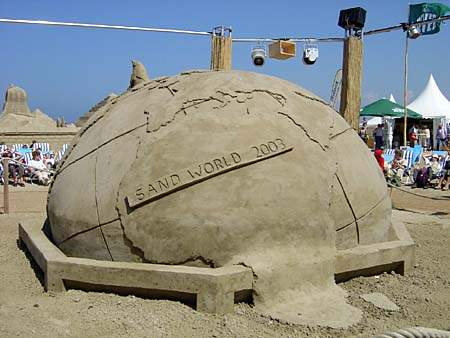
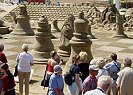
"Oh! Cool! Chess!!! At last something interesting!" said a six-year-old when he caught sight of the giant chess pieces at the "Sand World 2003" exhibition in Travemünde. Chess is definitely "in", and it is natural that the "carvers" produced some very impressive pieces between between Angkor Wat and the Sphinx of Gizeh.
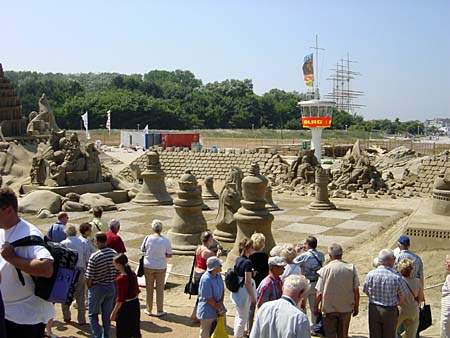
Chess pieces made of sand? The obvious disadvantage is the immense difficulty involved in making a single move. It is not just the stability of the pieces, which have been built to withstand rain and wind, but also their size. In a regular chess set the king is about three and a half inches high, open-air chess sets have two and a half foot pieces. In Travemünde the kings stand more than eight feet tall.
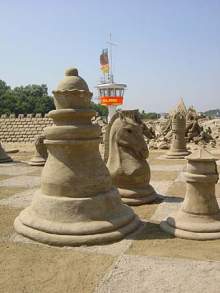
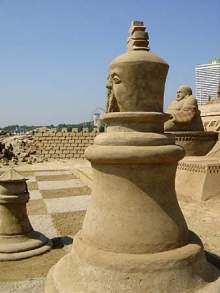
Imagine the effort involved in simply playing 1.e4 with these pieces!
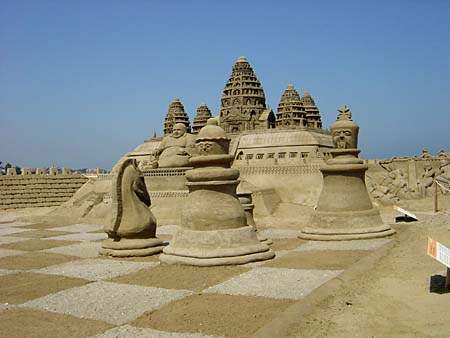
A giant chessboard in front of the Angkor
Wat temple of Cambodia, both in sand
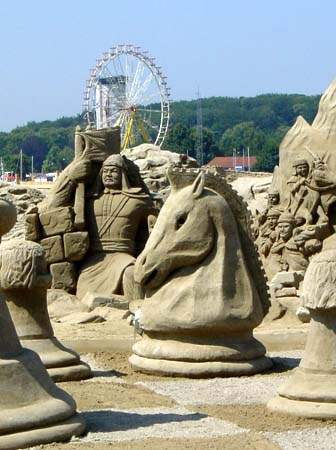
Jengis Khan seems interested in this chess game
The technique of making sand sculptures is relatively simple – Sand World 2003 even offers courses for beginners. First you create a very firm block of moist sand, using mallets to compress layer after layer of sand until the block is large and firm enough for the project you plan. After that you use different carving tools – trowels, scoops, knives, spoons – to form the sculpture.
Here are some astonishing non-chess examples of sculptures at Sand World 2003.
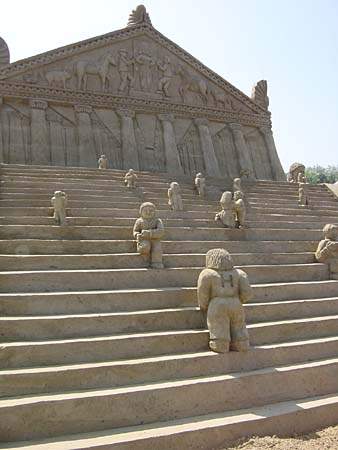
The Temple
of Artemis at Ephesus
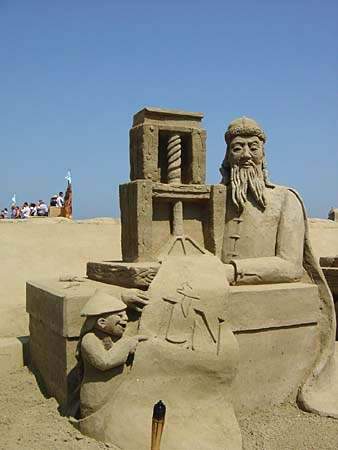
Johann Gutenberg and his printing
press
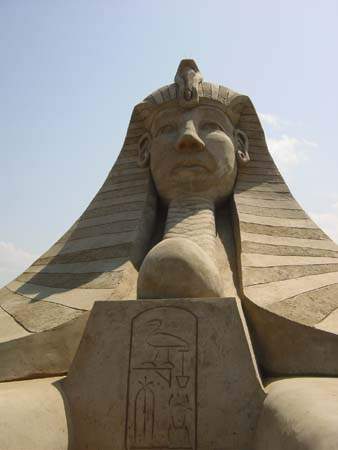
Restored to full glory: the Sphinx
of Giza
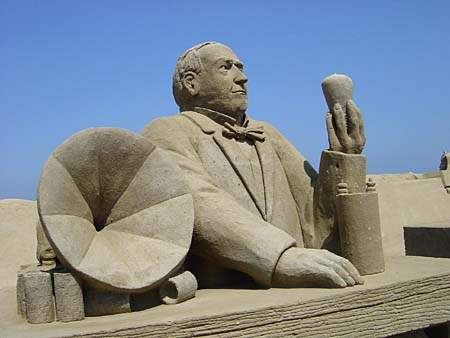
Alexander Graham Bell, who invented the use copper wires for communication
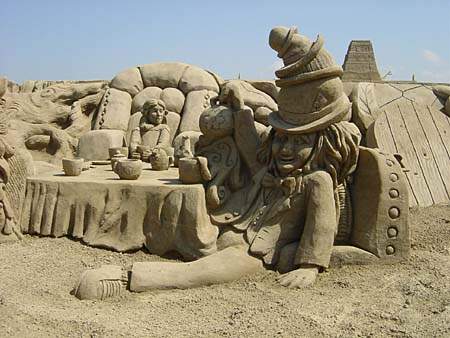
The mad hatter's party from Alice in Wonderland
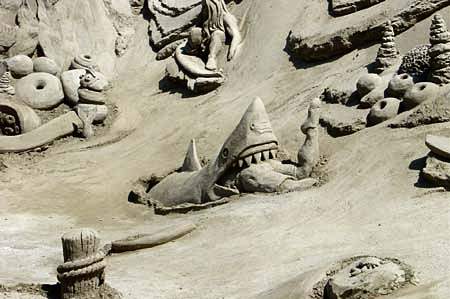
The Great Barrier Reef, where you can spend your next holidays scuba-diving
Pictures and report by Nadja Woisin